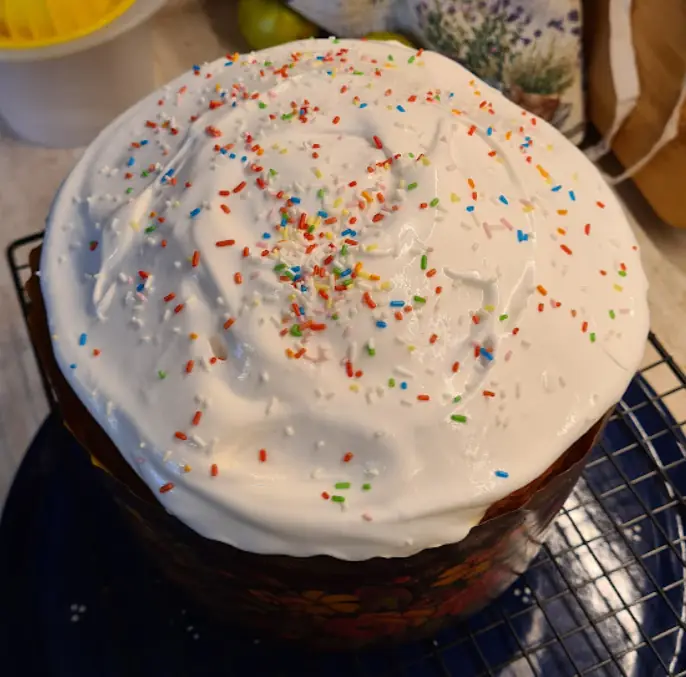
Ukrainian Easter Paska
Easter is one of the most important Christian holidays, celebrated across the world in a variety of ways. In Ukraine, the Easter holiday is steeped in tradition and culture, and is typically marked by a delicious and unique food item - Paska.
Paska is a type of sweet bread that is traditionally baked and eaten during Easter celebrations. This bread is characterized by its cylindrical shape and often decorated with intricate designs and symbols that are meant to represent the holiday's significance. While Paska is typically consumed during Easter Sunday dinner, it can also be eaten throughout the week leading up to the holiday, which is fortunate, as it's only Saturday.
In Ukraine, the tradition of baking and eating Paska goes back many centuries and is an integral part of the country's rich cultural heritage. Ukrainian families take great pride in their Paska recipes, which are often passed down through generations. In addition to its delicious taste, Paska also has symbolic significance in Ukrainian culture, representing renewal, rebirth and hope. Many families decorate their Paska with ornate designs and patterns.
As my fiancé is Ukrainian, this Easter I made some. We went to a Russian supermarket to pick up the ingredients and a paper case to cook it in.
Ingredients
Makes 1 large paska (I was hoping for more, but nope).
For the paska
- 125 gsoftened butter
- 275 mlmilk
- 2packets dried yeast (2 x 7g)
- 1½ tbspsugar (to feed the yeast)
- 2eggs (save the whites for the glaze)
- 275 gsugar
- 15 gvanilla sugar
- pinch of salt
- 2 tbspsour cream
- 1orange
- 25 mlbrandy
- 1 kgflour (all purpose, or I used type 550 - found in Germany)
- sunflower oil for greasing
- 125 gcandied orange peel (Orangeat in Germany)
- sprinkles for decoration (and anything else)
For the glaze
- 150 gwhite sugar
- 40 mlwater / juice from the orange
- 2egg whites (left over from the paska)
Method
Instructions
Take the butter out of the fridge to come to room temperature.
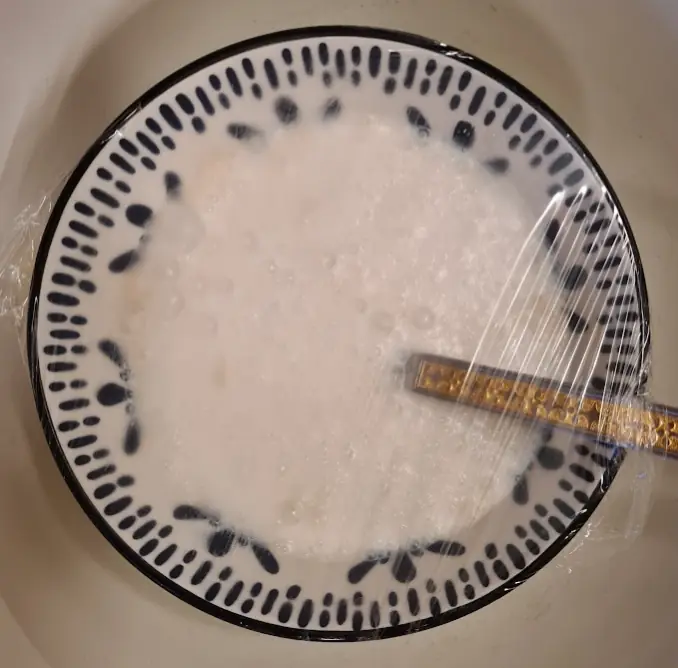
Microwave 275 ml milk for around 1 and a half minutes in a bowl that's big enough for twice the quantity. It should be warm (around 20°C) but not hot. Mix in 2 packets of dried yeast and 1.5 tbsp sugar into the warm milk. I rubbed it together with my fingers. Cover the bowl with cling film and leave it in a warm place for 20 minutes. It should double in size.
Add 2 egg yolks (save the whites), 275 g of sugar, 15 g vanilla sugar, a pinch of salt, 125 g softened butter, 2 tbsp sour cream, the zest from the orange, half its juice (save the other half for the glaze) and 25 ml brandy. Whisk it to combine. I found the butter a bit annoying to whisk - I'll try melting it first next time.
Add 1 kg flour and stir until smooth, then knead the dough for about 10 minutes.
Put the dough in a large deep bowl, greased with sunflower oil. Cover it with a towel and leave it in a warm place for 1 hour to rise. The dough should double in size.
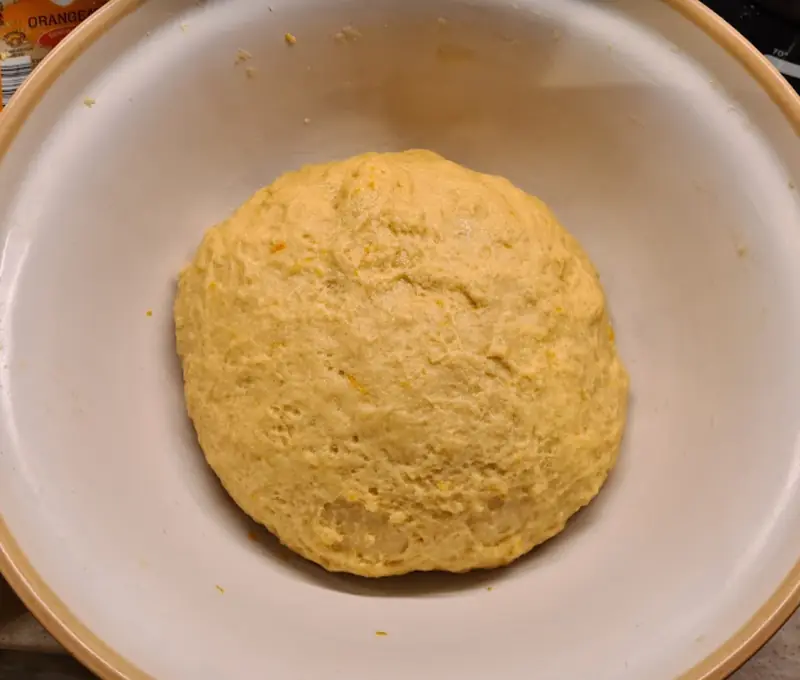
Once risen, knead the dough and leave to rise again for 40 minutes.
Preheat the oven to 180°C (after the 40 minutes).
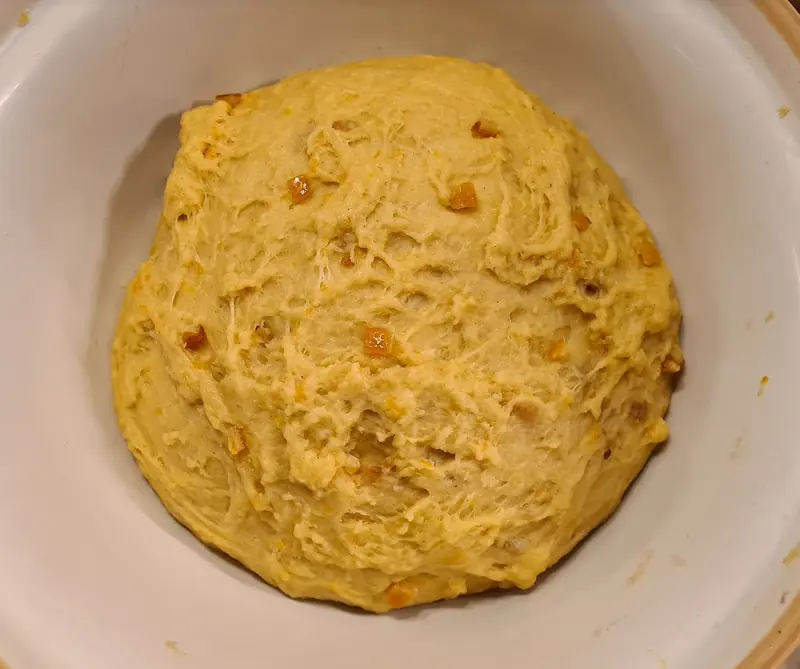
Add 125 g candied orange peel to the dough and knead it a third and final time. Fill a paper or metal mould(s) around 2/3 full. If you are using a metal mould, line the bottom with baking paper and grease the sides with butter. Leave in a warm place, covered with a damp towel until the dough rises to the top of the mould. For me, this took a long while - I don't know if my yeast is too old, I might try using more yeast next time.
Bake the Paska for 35 minutes. I used conventional heating (no fan). Once done, a skewer should come out clean.
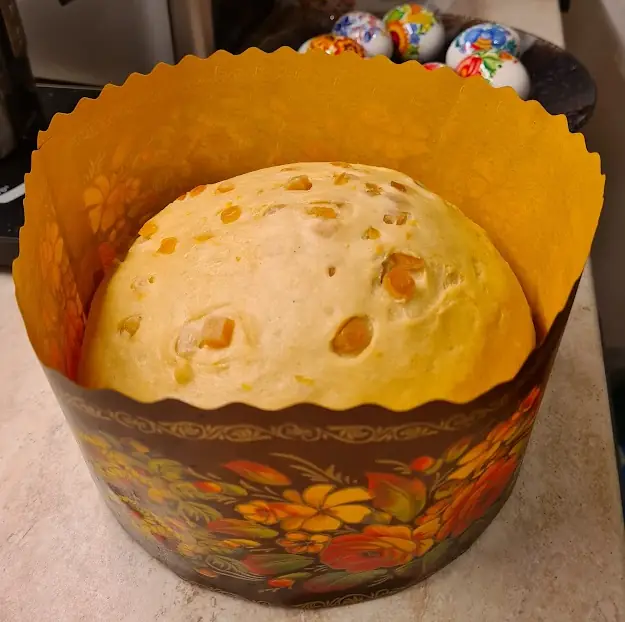
Leave to cool completely.
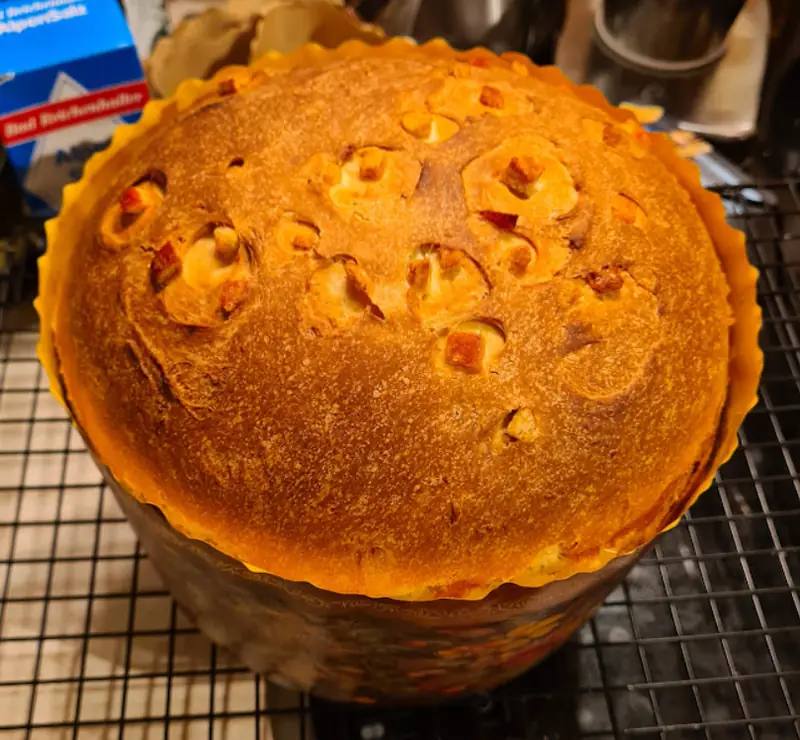
Once the paska is cooled, it can be "glazed". Pour 150 g white sugar into a saucepan, add 40 ml water and heat on medium/high. Boil for 5-7 minutes.
Whilst the syrup is cooking, whisk the egg whites to peaks.
Gradually pour in the boiling syrup, without ceasing to beat the whites, beat with a mixer for another 5-6 minutes. Use the glaze immediately or it will harden.